
Blog
Car Valuation Switzerland: Set the Right Price Before Selling
Find out how to estimate your car’s value in Switzerland using mileage, condition, inspection status, service history and real market demand.
27.05.2026
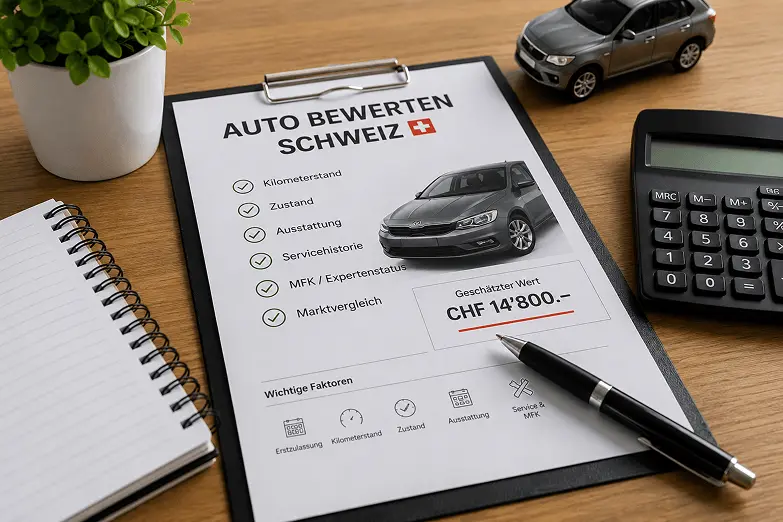
Selling a car in Switzerland starts long before the first buyer sends a message. The most important step is setting a price that makes sense. If the price is too high, your listing may sit online without serious interest. If the price is too low, you may sell quickly but lose money. A proper car valuation helps you find the balance between visibility, trust and a fair final price.
Why pricing matters more than most sellers think
Buyers in Switzerland usually compare several vehicles before making contact. They look at mileage, model year, inspection status, service history, equipment, condition and location. A car that is priced without considering these details can easily look unattractive next to similar listings. That is why the valuation should come before the advertisement, not after weeks of poor results.
What affects the value of a car in Switzerland?
- Mileage: Lower mileage can increase value, especially when the car has also been well maintained.
- Model year: Newer cars or updated model generations usually attract more attention.
- Inspection status: A recent Swiss vehicle inspection can make buyers feel more secure.
- Service history: Invoices, service records and documented maintenance help justify a stronger price.
- Vehicle condition: Scratches, dents, worn interiors or mechanical issues should be reflected in the asking price.
- Equipment: Automatic transmission, all-wheel drive, navigation, driver assistance systems, leather seats or extra wheels can add value.
- Regional demand: City cars, family cars, electric cars and all-wheel-drive vehicles may perform differently depending on the region.
How to compare your car with the market
Do not compare your vehicle with just any car from the same brand. Look for cars with the same model generation, similar mileage, comparable age, similar engine, transmission and equipment. A vehicle with fresh inspection, clean interior, good tyres and documented service history should not be priced the same as a similar car with missing records and visible damage.
Asking price is not always selling price
One common mistake is assuming that online listing prices are final selling prices. In reality, many cars are sold after negotiation. If you list your car at 12,900 CHF, the final deal may happen slightly below that. The goal is to leave enough room for negotiation without setting a price that discourages buyers from contacting you.
When you can ask for a stronger price
- The car has a recent or still valid Swiss inspection.
- Maintenance has been completed regularly and can be proven.
- The exterior and interior are clean and well cared for.
- The car includes winter wheels, new tyres or useful accessories.
- The equipment level is better than average for the model.
- The vehicle has a popular colour, engine or transmission.
When you should price more carefully
- The inspection is due soon or has expired.
- There are technical issues or visible damage.
- The service history is incomplete.
- The mileage is high compared with similar cars.
- Many similar vehicles are already available online.
Private sale or quick car buyer?
A quick car buyer may be convenient, but convenience often comes with a lower offer. A private sale can take more effort, but it may help you achieve a better price if the listing is honest, detailed and well presented. On Autogrid.ch, you can show the important details clearly and reach buyers who are actively searching for used cars in Switzerland.
Pricing checklist before publishing your listing
- Compare at least five similar vehicles in Switzerland.
- Check inspection status, service records and repair invoices.
- Review tyres, bodywork, interior condition and technical issues.
- List valuable equipment and accessories.
- Choose a realistic asking price with some negotiation room.
The best price is not always the highest price. It is the price that creates buyer interest while still protecting your value.
Final thought: Value first, listing second
A realistic car valuation makes the selling process easier and more professional. It helps you explain your price, avoid unnecessary discussions and create a listing that buyers can trust. Once you know the fair value of your vehicle, you can publish it on Autogrid.ch with confidence and attract more relevant enquiries.